
Government may allow foreign-funded Indian manufacturing firms to sell online
 By Pooja Vishant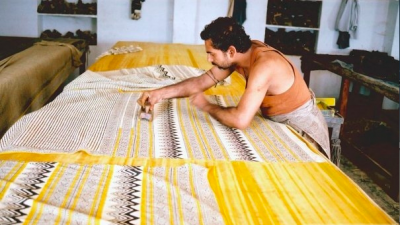

That foreign direct investments (FDI) in ecommerce are not permitted is no news. However, recent speculations indicate the government’s revival of interest in foreign funded Indian firms. Further to PM Modi’s efforts to boost the manufacturing sector and home-based brands like Fabindia, foreign funded Indian firms may be allowed to sell online if more than three-fourths of their products are made in India itself.
While announcing the budget on July 10th, Finance Minister Arun Jaitley did mention that manufacturers, who manufacture their goods locally, would be allowed to sell online even if they had foreign investors. But it’s interesting that there is no clear definition for ‘manufacturing’. So its unclear as to who would fall into this category.
Fabindia’s example, likely story of many manufacturers
Following this year’s Union budget, Fabindia has requested the Department of Industrial Policy & Promotion (DIPP) to grant them the manufacturer status to have access to foreign funds for further expansion. Currently, it is registered as a single brand retailer, although its own network of artisans makes 80% of the goods sold.
What do experts say?
“We are trying to find some solution to that and help an Indian brand grow big. Those manufacturing in India should be allowed to sell online. We will need to tweak the policy suitably,” said a DIPP official who didn’t want to be named.
Most of them are of the opinion that the government shouldn’t be so rigid when it comes to FDI policies. So far, the government has been opposing FDI because they feel this would be an entry point for international retail brands to enter India and hamper the growth of home-grown retailers.
“There’s hardly any company that manufactures everything on its own. Some items are sourced from third parties locally and some are imported. The government should take cues from RBI’s definition of erstwhile export-oriented units which said that if 60% of the goods were exported, it would qualify as an EOU,” said a chartered accountant asking not to be named.
Should manufacturers expect a change?
Although Jaitley announced that manufacturing firms, including online retailers, could sell their products through retail channels without additional approvals, there has not been any written confirmation or amendments regarding the same.
“We are still working on the notification. But 100% manufacturing condition is a bit too stringent. So for at least the Indian brands with foreign funding, we may keep the threshold lower at, say, 74%. We are yet to take a final decision,” said an official.
Just like Fabindia, who wants to be classified as a manufacturer to operate as a direct business to consumer ecommerce players, there are many others who want the same status so they can introduce new products without the hassles of additional government approvals and thrive in the flourishing ecommerce space.


No comments yet. Be the first to comment!